20+
Hours of Instruction
9+
Hours of DIM
30
Combined hours
Live
Office Hours Included
WHY THIS PROGRAM EXISTS
Why Do Some Students Still Need Part IV With Diagnostic Imaging?
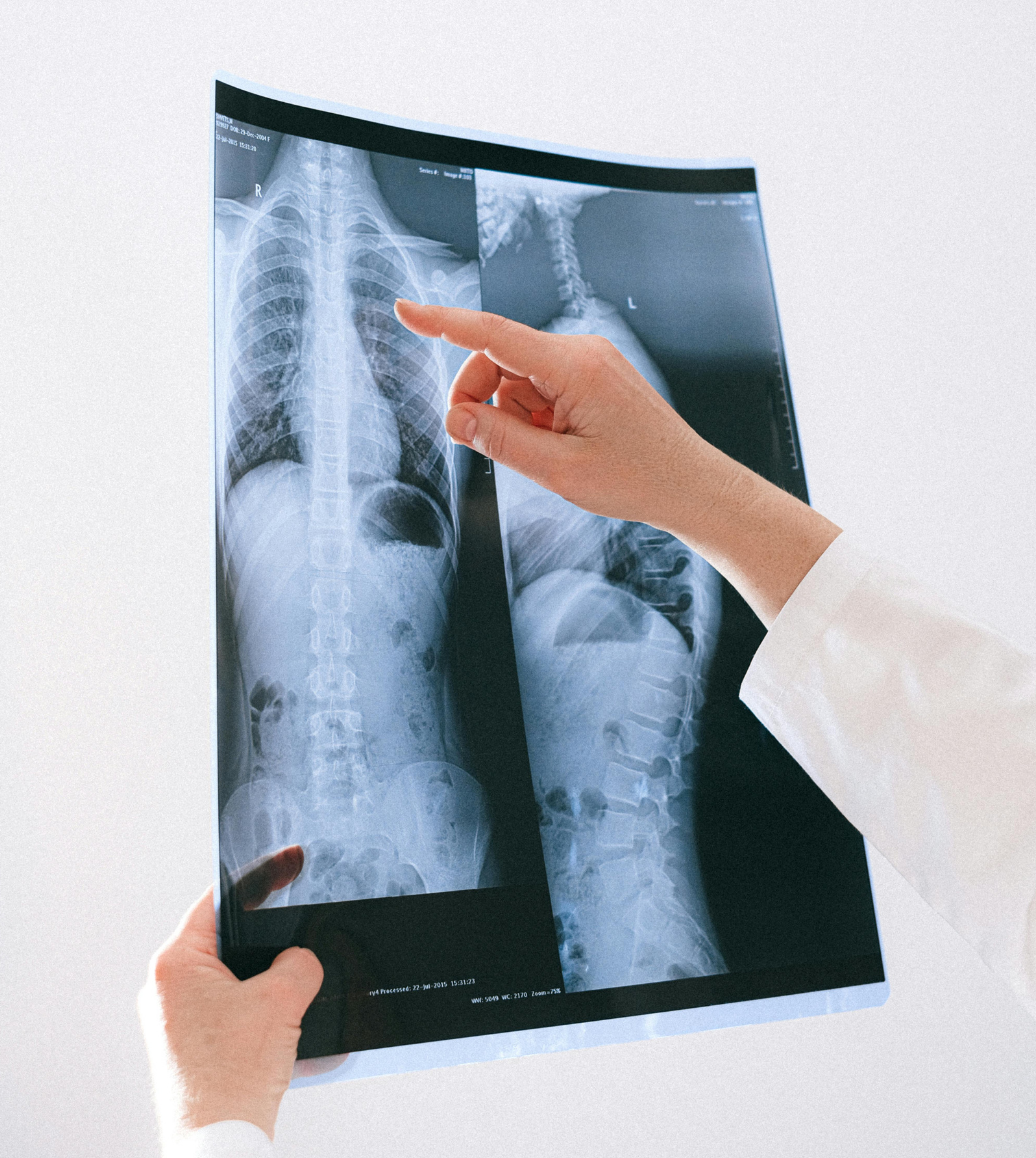
In 2021, NBCE moved the Diagnostic Imaging component from Part IV to Part III.
Students who completed Part III after that transition receive their Diagnostic Imaging testing as part of Part III.
But if you completed Part III before that change, you may still need to complete the Diagnostic Imaging component along with Part IV.
That puts you in a unique testing situation.
You don't just need a current Part IV review.
And you don't just need an X-ray course.
You need both.
Two Major Components.
One Comprehensive Review.
I didn't create a shortened version of either program.
Your Part IV with DIM Review combines the instruction students receive in my comprehensive Part IV program with the Diagnostic Imaging and X-ray instruction included in my Part III program.
Complete Part IV Preparation
- Case History
- Orthopedic Examination
- Neurological Examination
- Physical Examination
- Clinical Reasoning
- Putting It Together Case Examples
- Report of Findings
- SOAP Notes
- Chiropractic Listings
- Technique Setups
- Required Technique Verbal Components
- Supporting Procedure & Technique Videos
Comprehensive Diagnostic Imaging Preparation
- Nearly 9 additional hours of X-ray & DIM instruction
- Imaging concepts
- Regional findings
- Clinical interpretation
- Image recognition
- Testing strategies
You aren't piecing together two different study resources. I've already put the material together for you.
Part IV Preparation That Teaches You the Entire Patient Encounter
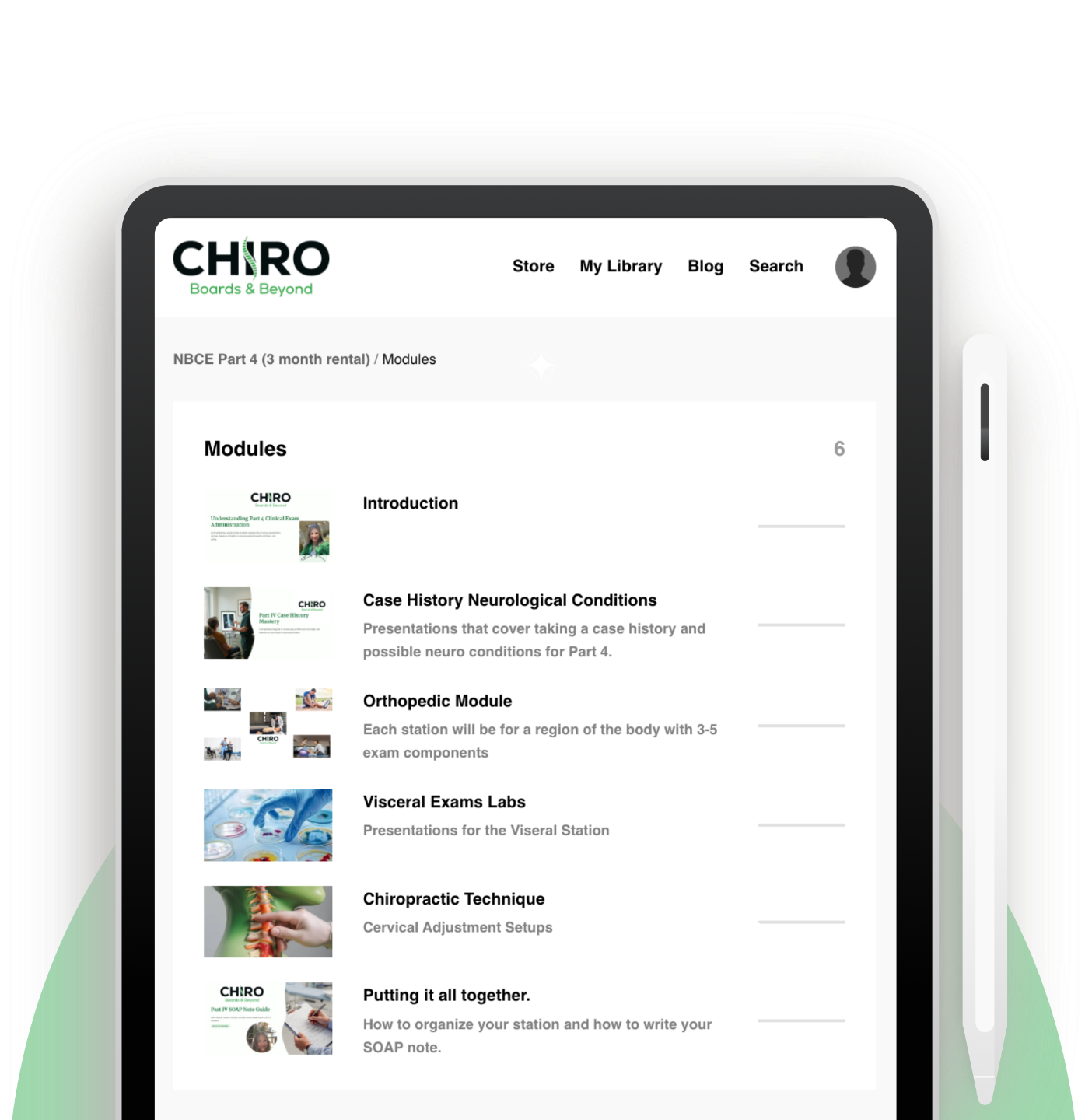
The Part IV portion of this program isn't simply a collection of orthopedic tests and adjustment setups. I teach you how to organize the entire patient encounter. That starts with the case history. From there, we use the history to determine what comes next.
The goal is not to memorize isolated procedures. It's to know how to put the pieces together.
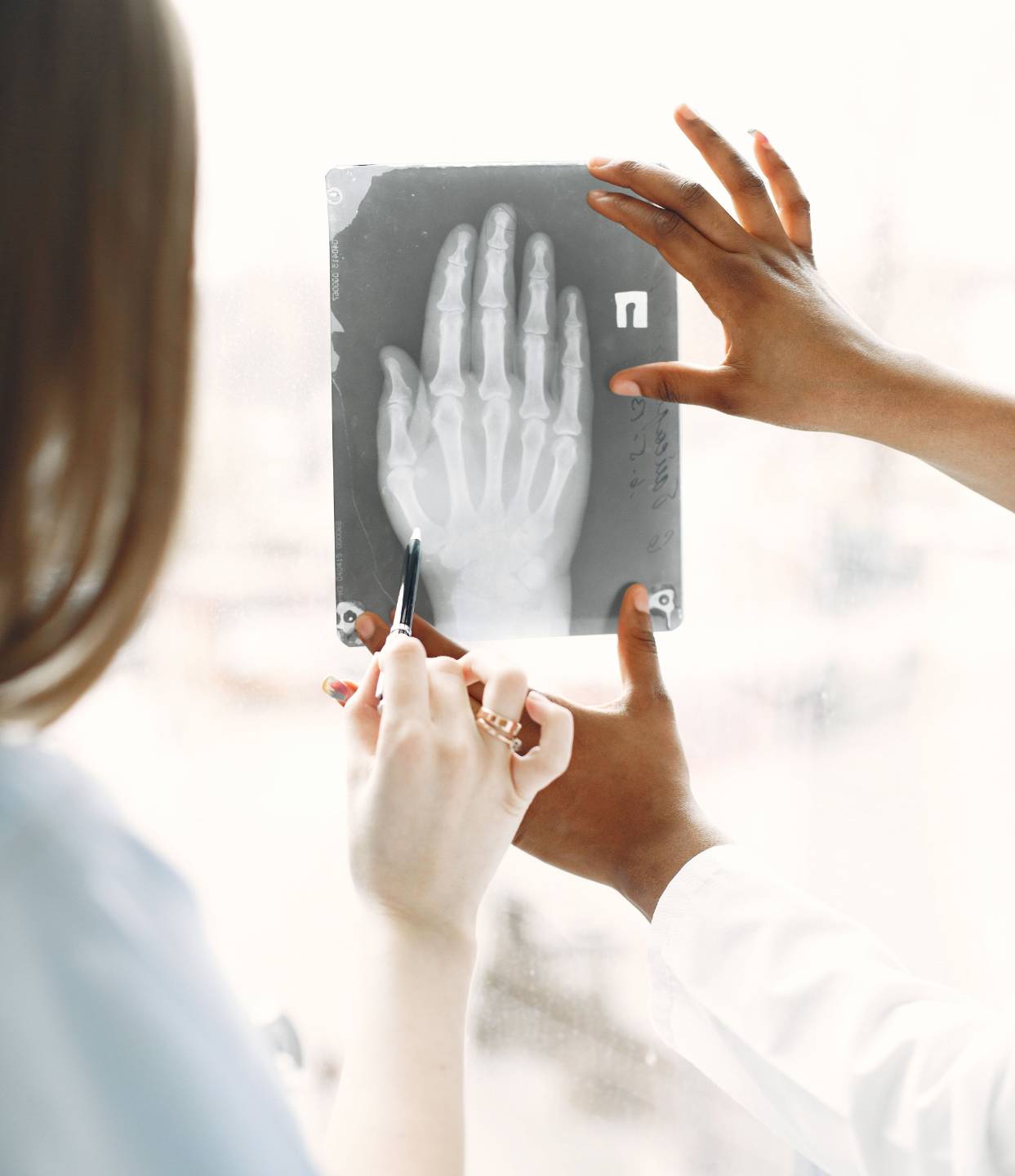
WALK INTO THE ROOM WITH A PLAN
Learn the Case History Before You Walk Into the Room
You shouldn't walk into a Part IV case trying to invent your history questions while the clock is running.
I give you a structured case history script that you can practice before test day.
You'll learn how to gather the important information, stay organized, and use the patient's responses to begin determining which examinations are appropriate. The script gives you a framework. The clinical reasoning tells you what to do with the information you collect.
Orthopedic, Neurological, and Physical Exams Organized the Way You'll Need Them
I organize the examination material around body regions, clinical presentations, and conditions.
Why? Because that's how you're going to need to retrieve the information when you're given a patient presentation.
You'll work through the appropriate:
The PowerPoint instruction is also supported by video demonstrations, allowing you to actually see the relevant examination procedures performed.
You don't just need to remember the name of an orthopedic test.
You need to know when to choose it, how to perform it, and where it belongs in your examination.
Then We Put It Together
This Is Where the Pieces Become a Patient Encounter.
Throughout the Part IV program, I include dedicated "Putting It Together" instruction. I give you a sample case history and then walk you through how to organize the examination based on what that patient told you.
SAMPLE CASE HISTORY:
I give you a sample case history and then walk you through how to organize the examination based on what that patient told you.
We answer questions such as:
Instead of teaching you individual procedures and expecting you to figure out how to assemble them on test day, I show you how they fit together.
Know the pieces. Then practice the sequence.
Detailed SOAP Note Preparation
After your patient encounter, you need to document what happened. Your program includes detailed instruction on the requirements of your Part IV SOAP note and how the information from the encounter carries into your documentation.
We'll organize:

Subjective

Objective

Assessment

Plan
Your SOAP note shouldn't feel like a completely different test.
It should reflect the history, examination findings, and clinical reasoning you just worked through.
WHAT'S COVERED
20+ Hours of Comprehensive Part III Instructions
Your Part III Board Review includes 20+ hours of on-demand recorded instruction, along with supporting PDF materials.
The course provides detailed review of the major Part III content areas, including:
General Diagnosis
Neuromusculoskeletal Diagnosis
Clinical presentations and differential diagnosis
Extensive Diagnostic Imaging and X-ray review
Commonly tested clinical vignettes
Board-focused question strategy
Common multiple-choice traps and distractors
But instead of keeping these topics isolated from one another, I bring them together by body region and clinical presentation.
This allows you to compare related conditions while the information is fresh, connect clinical findings with imaging, and understand why one diagnosis fits while another does not.
Learn Part III the Way You'll Need to Think Through It
Part III questions often require you to pull information from several different areas at once.
WHAT ACTUALLY HAPPENS IN THE ROOM
"A patient doesn't walk into your office as a chapter titled 'Neuromusculoskeletal Diagnosis.'"
They walk in with a complaint.
They give you a history.
You examine them.
You interpret the findings.
You look at imaging when appropriate.
Then you determine what those pieces mean together.
WHY WE TRAIN IT THIS WAY
Learn the Case History Before You Walk Into the Room
You shouldn't walk into a Part IV case trying to invent your history questions while the clock is running. I give you a structured case history script that you can practice before test day.
You'll learn how to gather the important information, stay organized, and use the patient's responses to begin determining which examinations are appropriate. The script gives you a framework. The clinical reasoning tells you what to do with the information you collect.
Learn the Common Part III Question Tricks
Sometimes you know the material, but the way the question is written makes you second-guess yourself. That's why we don't only study content — we study how the content is tested.
Throughout the program, I point out common ways multiple-choice questions can try to pull you away from the best answer.
You may see:
I teach you to slow the question down, identify the clues, eliminate what doesn't fit, and then:
Answer the question they actually asked.
Knowing the material matters. Knowing how to navigate the question matters too.
BUILT ON REAL TEACHING EXPERIENCE
20+ Years of Board-Teaching Experience,
Available On Demand
There is a difference between knowing clinical material and knowing how students are likely to be tested on that material.
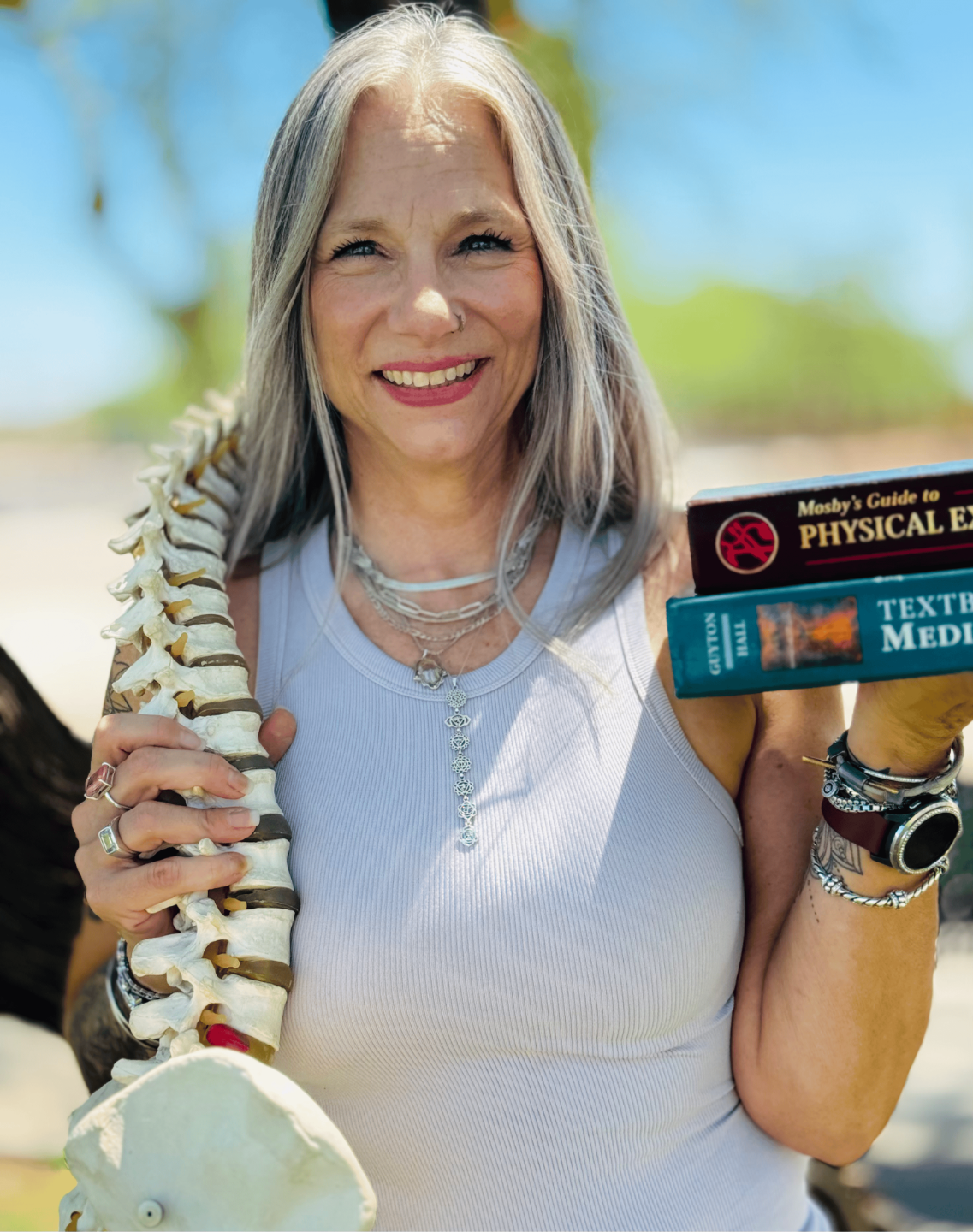
Dr. Jo Kaleta brings more than 20 years of chiropractic board-review teaching experience into this program.
Over those years, she has seen where students get confused, which concepts repeatedly cause problems, which clinical presentations deserve extra attention, and how subtle wording can change what a board question is actually asking.
That experience is built into the lectures.
You're not simply hearing what a condition is.
You're learning:
▶ How to recognize it.
▶ What it can be confused with.
▶ What findings help differentiate it.
▶ How it may appear in a vignette.
▶ What you might see on X-ray.
▶ And how to avoid getting pulled toward the wrong answer.
STUDY ON YOUR OWN SCHEDULE
Your Board Prep Should Fit Your Test Date
With more frequent NBCE testing opportunities, your preparation shouldn't depend on when the next live review happens to be scheduled.
Your Part III program is on demand.
- Start according to your testing schedule.
- Study around clinic, classes, work, and life.
- Pause when your brain needs a break.
- Rewind when something doesn't make sense.
- Rewatch a difficult body region.
- Return to the X-ray lectures again before your test.
- Review a common vignette until you can recognize the pattern without having to memorize every individual detail.
The classroom waits for you.
On-Demand Doesn't Mean On Your Own
You aren't purchasing 20+ hours of videos and then expected to figure everything else out by yourself.
Your enrollment also includes access to scheduled live online Office Hours with Dr. Jo.
- Confused about two diagnoses that look almost identical? Ask me.
- Can't figure out why one answer is better than another? Let's break the question apart.
- Need clarification on an X-ray finding? Bring the question.
- Want help connecting the clinical presentation to the diagnosis? Let's work through it.
Office Hours allow you to study independently while still having opportunities for live instructor support and clarification.
Learn on your schedule. Get live support when you need it.
Discover Community SupportOFFICE HOURS ROTATION
| Week 1 | Wednesday mornings |
| Week 2 | Wednesday evenings |
| Week 3 | Saturday afternoons |
| Week 4 | Rotation repeats |
Office Hours rotate to accommodate students in different time zones.
What You Get With Your Part I Review
01
20+ hours of on-demand recorded instruction
02
Content covering the NBCE Part III Test Plan
03
Clinical material reorganized by body region for stronger pattern recognition
04
General Diagnosis integrated with clinical presentations
05
Neuromusculoskeletal Diagnosis
06
Extensive X-ray and Diagnostic Imaging review
07
Emphasis on commonly tested clinical vignettes
08
Common imaging presentations and frequently tested X-ray concepts
09
Strategies for recognizing multiple-choice traps and distractors
10
Detailed supporting PDF study materials
11
More than 20 years of board-review teaching experience built into the instruction
12
Clinical pearls, analogies, patterns, and differential diagnosis
13
The ability to pause, rewind, and rewatch throughout your access period
14
Scheduled live online Office Hours with Dr. Jo
15
Neurodivergent-friendly organization and teaching strategies
16
Option to add private 1:1 tutoring for individualized support
THE BIGGER PICTURE
From Part III Clinical Reasoning to
Part IV Performance
Part III isn't isolated from what comes next.
The clinical reasoning you're building here becomes increasingly important as you move into Part IV.
You're taking:
01
When you're given a patient history on Part IV and need to determine which neurological and orthopedic examinations are appropriate, you're using the same clinical reasoning we're strengthening here.

02
History → Presentation → Examination → Differential Diagnosis → Clinical Decision
03
You're taking that knowledge and eventually turning it into action.
04
And after boards, that's exactly what you'll do with your patients.
WANT MORE INDIVIDUALIZED SUPPORT?
Add 1:1 tutoring with Dr. Jo
Part III is an excellent exam to combine with individualized tutoring because we can quickly identify where your reasoning is breaking down.
Maybe you know the diagnosis but struggle with vignettes. Maybe two answer choices repeatedly pull you in different directions. Maybe X-ray is your weakest area. Maybe you know the information until it's presented in a question. Or maybe you're changing correct answers because the distractors make you second-guess yourself.
In private tutoring, we can work through questions together, identify your patterns, strengthen differential diagnosis, practice vignettes, review X-ray, and improve your testing strategy.
The recorded program builds the foundation. Tutoring lets us focus on YOU.
Frequently Asked Question
Does the course follow the NBCE Part III Test Plan?
Why is the course organized by body region?
Does the program include X-ray?
Do you teach clinical vignettes?
Do you teach test-taking strategy?
Can I rewatch the videos?
What happens if I have questions while I'm taking the course?
What if I've already failed Part III?
What if I'm not sure whether I need the course, tutoring, or both?
Ready to Start Seeing the Whole Clinical Picture?
Part III doesn't have to feel like hundreds of unrelated diagnoses, X-rays, examination findings, and facts floating around in your head.
See the patient.
Recognize the pattern.
Connect the X-ray.
Answer the question they actually asked.
That's Part III with Chiro Boards & Beyond.
Not sure where to start? That's what the free consult is for.