15–16
Hours of Instruction
15+
Content Areas Covered
2x
CCSP Exam Offered Yearly
Live
Office Hours Included
WHY THIS PROGRAM EXISTS
This Isn't an NBCE Exam, and Your Preparation Should Reflect That
The CCSP® certification examination is administered through the American Chiropractic Board of Sports Physicians™ (ACBSP™). Unlike Parts I through IV of your chiropractic boards, the CCSP is a professional sports chiropractic certification examination — and it's offered only twice each year.
That means your preparation needs to be intentional. You don't want to get close to your testing date and suddenly realize how much material you need to bring back together.
Work through the material on your own schedule, on demand
Return to the sections that still feel unclear as your date approaches
Study with a plan instead of scrambling to reassemble everything at once
Study when it works for you. Rewatch what you need. Prepare with a plan.
Sports Medicine Is More Than Orthopedic Injuries
When people think about sports chiropractic, they often immediately think about shoulders, knees, ankles, and spinal injuries. But the CCSP examination requires a much broader understanding of the athlete — this review reaches well beyond musculoskeletal diagnosis.
The completed program will cover areas including:
THE WHOLE ATHLETE
- Sports Physiology
- Biomechanics
- Sports Nutrition
- Concussion
- Special Conditions
PRACTICE & READINESS
- Team Concepts
- Medico-Legal Concepts
- Environmental Considerations
- Emergency Procedures
- Injury Prevention
- Adjunctive Therapies
REGIONAL PATHOLOGY & IMAGING
- Spinal Pathologies
- Upper Extremity Pathologies
- Lower Extremity Pathologies
- Diagnostic Imaging & X-Ray
The goal is to help you organize this broad body of information into something you can understand, retrieve, and apply.
Start My CCSP Review:
Approximately 15 to 16 Hours of Comprehensive CCSP Instruction
When completed, your CCSP Board Review will contain approximately 15 to 16 hours of recorded lecture material covering the major areas of sports chiropractic examination preparation.
Sports Physiology
Review the physiological demands of exercise and athletic performance, then connect those concepts to the athlete you're evaluating and managing.
Team Concepts
Understand the role of the sports chiropractor within the larger sports medicine environment, including working with athletes, coaches, trainers, and other healthcare professionals.
Concussion
Review concussion assessment and management concepts, including recognition, evaluation, clinical decision-making, and return-to-activity considerations.
Biomechanics
Connect biomechanics to athletic movement, injury mechanisms, examination findings, and clinical management.
Sports Nutrition
Review the nutritional concepts relevant to athletic performance, recovery, hydration, and the needs of active patients.
Environmental Considerations
Prepare for conditions related to the athlete's environment, including the factors that can affect performance, safety, and medical decision-making.
Medico-Legal Considerations
Review the professional, legal, documentation, and decision-making concepts that become particularly important when caring for athletes.
Adjunctive Therapies
Organize the adjunctive treatment approaches that may be incorporated into sports chiropractic management.
Special Conditions
Review important special populations and conditions that can affect athletic participation, examination, management, and return-to-play decisions.
Injury Prevention
Move beyond treating an injury after it occurs.
Review the concepts involved in identifying risk, reducing injury potential, and helping athletes participate more safely.
Emergency Procedures
Know how to recognize when an athletic situation has moved beyond routine musculoskeletal care and requires immediate action. We'll review the concepts and sequencing that matter when you're managing an emergency rather than simply memorizing isolated procedures.
Part IV Preparation That Teaches You the Entire Patient Encounter
The Part IV portion of this program isn't simply a collection of orthopedic tests and adjustment setups. I teach you how to organize the entire patient encounter. That starts with the case history. From there, we use the history to determine what comes next.
The goal is not to memorize isolated procedures. It's to know how to put the pieces together.
WALK INTO THE ROOM WITH A PLAN
Learn the Case History Before You Walk Into the Room
You shouldn't walk into a Part IV case trying to invent your history questions while the clock is running.
I give you a structured case history script that you can practice before test day.
You'll learn how to gather the important information, stay organized, and use the patient's responses to begin determining which examinations are appropriate. The script gives you a framework. The clinical reasoning tells you what to do with the information you collect.
Start Studying Today:
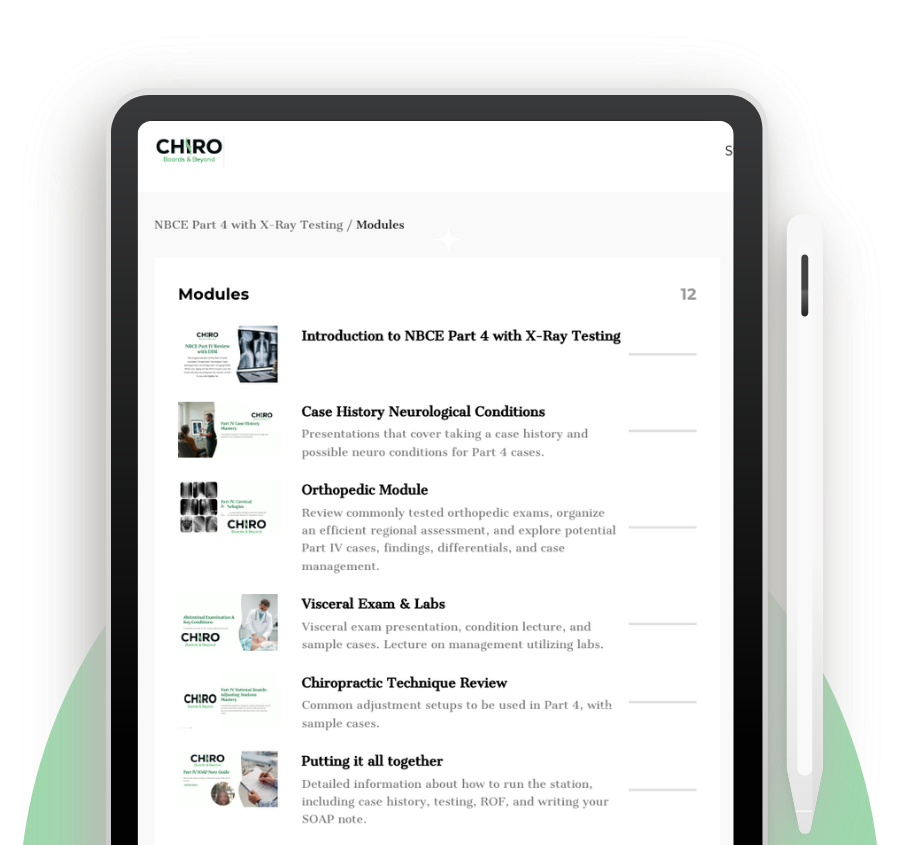
Orthopedic, Neurological, and Physical Exams Organized the Way You'll Need Them
I organize the examination material around body regions, clinical presentations, and conditions.
Why? Because that's how you're going to need to retrieve the information when you're given a patient presentation.
You'll work through the appropriate:
The PowerPoint instruction is also supported by video demonstrations, allowing you to actually see the relevant examination procedures performed.
You don't just need to remember the name of an orthopedic test.
You need to know when to choose it, how to perform it, and where it belongs in your examination.
Then We Put It Together
This Is Where the Pieces Become a Patient Encounter.
Throughout the Part IV program, I include dedicated "Putting It Together" instruction. I give you a sample case history and then walk you through how to organize the examination based on what that patient told you.
SAMPLE CASE HISTORY:
I give you a sample case history and then walk you through how to organize the examination based on what that patient told you.
We answer questions such as:
Instead of teaching you individual procedures and expecting you to figure out how to assemble them on test day, I show you how they fit together.
Know the pieces. Then practice the sequence.
Detailed SOAP Note Preparation
After your patient encounter, you need to document what happened. Your program includes detailed instruction on the requirements of your Part IV SOAP note and how the information from the encounter carries into your documentation.
We'll organize:

Subjective

Objective

Assessment

Plan
Your SOAP note shouldn't feel like a completely different test.
It should reflect the history, examination findings, and clinical reasoning you just worked through.
Technique, From Reading the Listing to Performing the Setup
The technique portion of this program goes far beyond showing you a picture of an adjustment.
I break down how to read the listing system, determine what the listing is telling you, identify the appropriate side of patient contact, and organize the setup.
You'll review:
- Patient position
- Doctor position
- Patient contact point
- Doctor contact point
- Side of contact
- Stabilization
- Tissue slack
- Line of drive
- Thrust or no-thrust callout
Start My Part IV with DIM Review:
Know What You Need to Say During Your Technique Setups
I give you scripts and verbal frameworks so you can practice saying the required components as you're performing the setup — rather than getting to the end and realizing you forgot to call something out. The goal is to make the verbal components part of your setup sequence.
See it. Practice it. Say it. Repeat it.
WHAT YOU DEMONSTRATE
The physical setup
Position, contact, stabilization, line of drive.
WHAT YOU SAY
The required verbal components
Scripts & frameworks so you never forget a callout.
Start My Part IV with DIM Review:
Then We Add the Diagnostic Imaging You Still Need
This is what makes this program different from the standard Part IV Review.
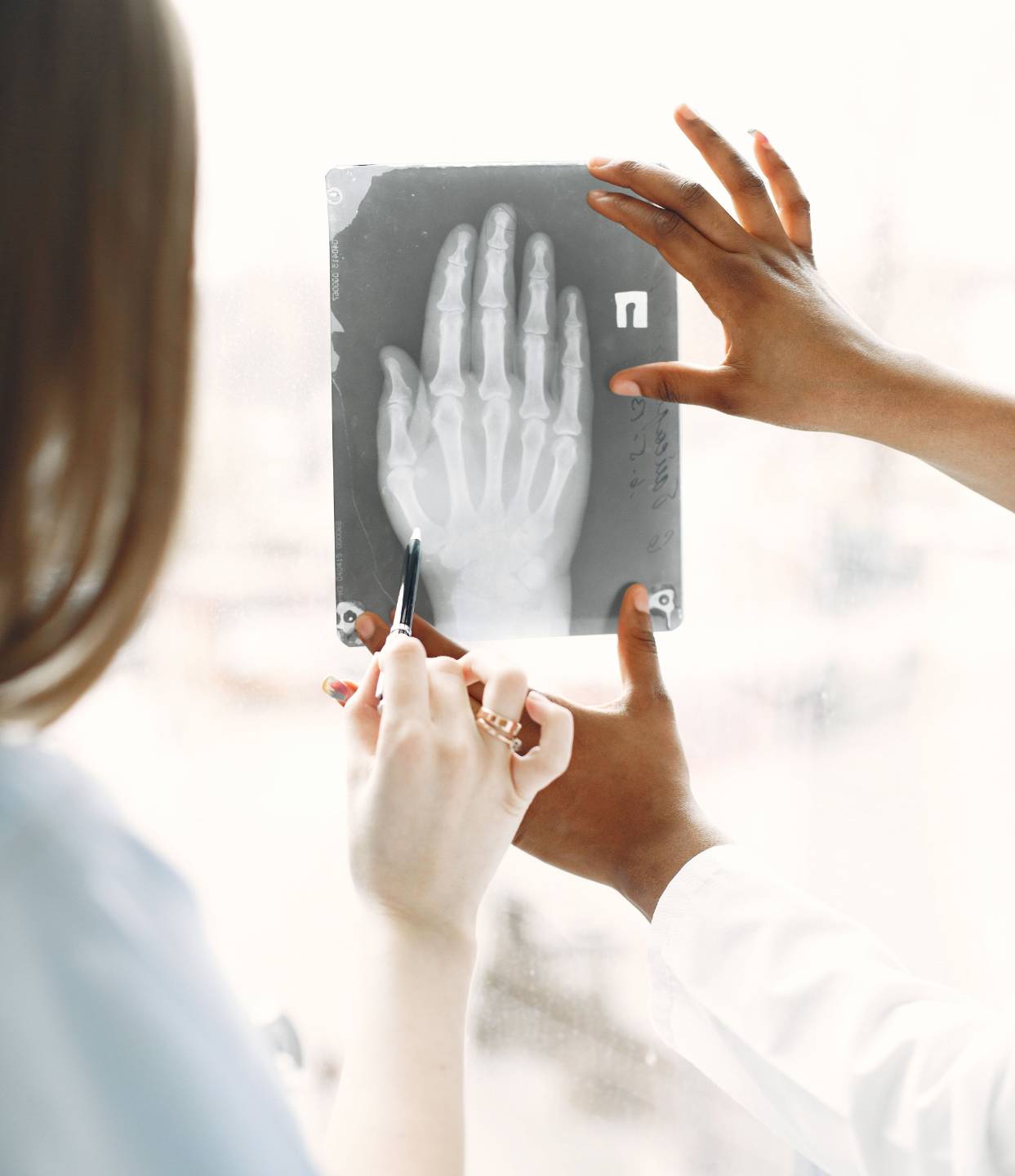
In addition to all of the Part IV instruction, you receive nearly 9 additional hours of focused X-ray and Diagnostic Imaging instruction.
This is the same comprehensive imaging instruction used to prepare students for the Diagnostic Imaging material now tested with Part III.
The goal is not simply to memorize another collection of radiographic signs.
Learn to Read the Image,
Not Just Memorize the Diagnosis
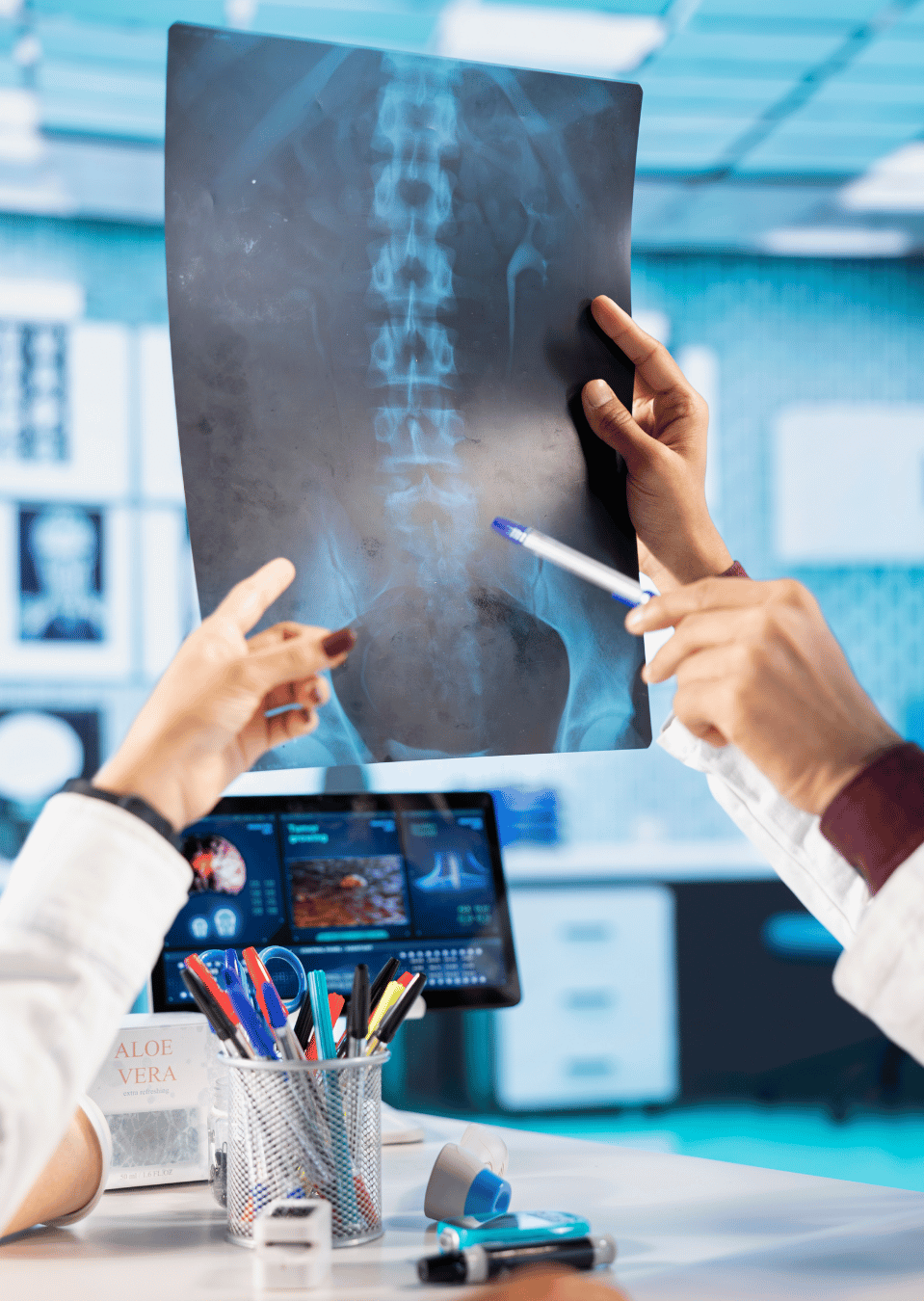
When you're looking at an image under testing pressure, you need a systematic way to process what you're seeing.
Throughout the Diagnostic Imaging lectures, we work through the major regions and imaging concepts while asking:
This is about developing image recognition and pattern recognition, not simply memorizing lists.
Almost 30 Hours of Combined Part IV and Diagnostic Imaging Instruction
This isn't a standard Part IV review with a few X-ray slides added at the end.
You're receiving two comprehensive areas of preparation combined into one program.
PART 1
Approximately 20 Hours of Part IV Instruction
Case history
Examination procedures
Orthopedics
Neurology
Physical examination
Putting It Together cases
Report of findings
SOAP notes
Chiropractic technique
Listings
Verbal components
Supporting videos
PART TWO
Nearly 9 Additional Hours of Diagnostic Imaging Instruction
Regional X-ray review
Imaging interpretation
Common radiographic presentations
Pattern recognition
Clinical correlations
Commonly tested concepts
Practice questions
One program built specifically for the student who still needs BOTH.
On-Demand Doesn't Mean On Your Own
You aren't purchasing almost 30 hours of instruction and then being expected to figure everything else out by yourself. Your enrollment also includes access to scheduled live online Office Hours with Dr. Jo.
Bring questions from either side of the program.
- Have a Part IV case question? Ask me.
- Unsure which orthopedic examination you would select? Let's work through it.
- Confused about a technique listing? Bring it.
- Have a question about your SOAP note? Ask.
- Can't differentiate two similar X-ray findings? Let's look at what separates them.
Office Hours allow you to combine the flexibility of independent, on-demand learning with opportunities for live instructor support and clarification.
Learn on your schedule. Get live support when you need it.
OFFICE HOURS ROTATION
| Week 1 | Wednesday mornings |
| Week 2 | Wednesday evenings |
| Week 3 | Saturday afternoons |
| Week 4 | Rotation repeats |
Office Hours are offered at scheduled times and may rotate to accommodate students in different time zones.
THE BIGGER PICTURE
Built Specifically for the Student Caught Between Two Testing Formats
You took Part III under the previous testing structure. Now you're completing Part IV after Diagnostic Imaging has moved. That can make your preparation feel confusing.
It doesn't have to be.
You don't need to piece together an old Part IV course, a current Part IV course, and random X-ray resources. I've already organized the material you need into one comprehensive program. You get the complete Part IV preparation. You get the Diagnostic Imaging preparation. And you get a structured path through both.
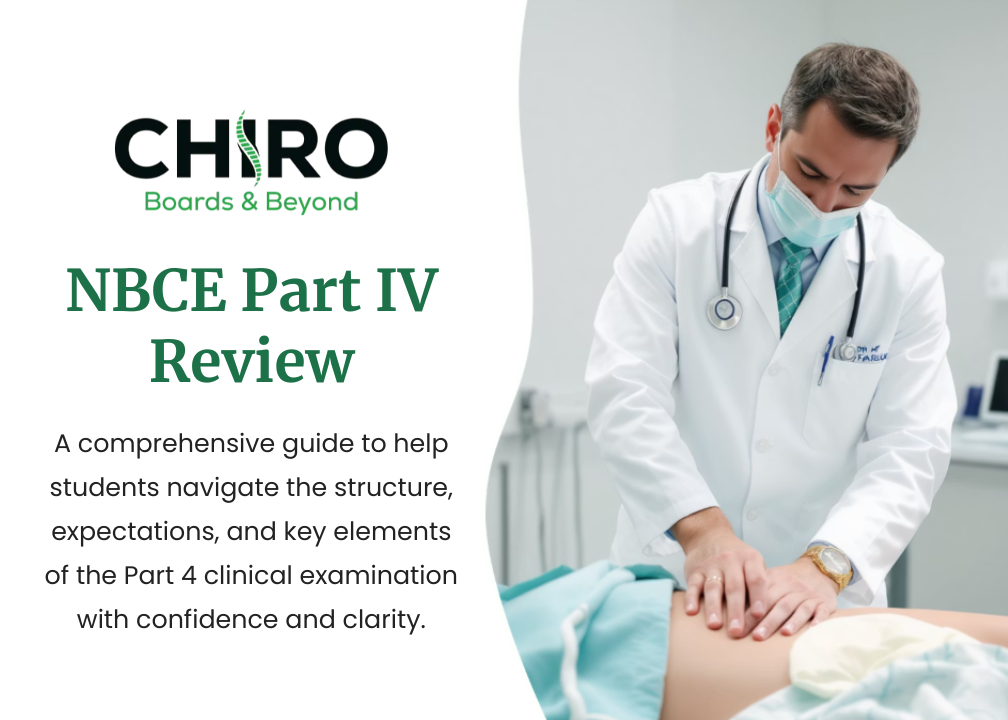
What You Get With Your
Part IV With Diagnostic Imaging
01
Approximately 20 hours of comprehensive Part IV instruction
02
Nearly 9 additional hours of Diagnostic Imaging and X-ray instruction
03
Detailed case history instruction and script
04
Orthopedic examination organized by region and condition
05
Neurological examination instruction
06
Physical examination procedures
07
Supporting video demonstrations
08
Dedicated Putting It Together case examples
09
Examination organization and sequencing
10
Report of findings guidance
11
Detailed SOAP note instruction
12
Chiropractic listing interpretation
13
Guidance for determining the appropriate side of contact
14
Comprehensive chiropractic technique setups
15
Supporting technique demonstration videos
16
Scripts for the required technique verbal components
17
Comprehensive regional X-ray review
18
Diagnostic Imaging interpretation
19
Common radiographic patterns and presentations
20
Commonly tested imaging concepts
21
Multiple-choice question strategies and common distractors
22
Diagnostic Imaging practice questions and examples
23
Detailed supporting PDFs
24
The ability to pause, rewind, and rewatch
25
Scheduled live online Office Hours with Dr. Jo
26
More than 20 years of chiropractic board-review teaching experience
27
Option to add private 1:1 tutoring
Start My Part IV Review Now:
WANT MORE INDIVIDUALIZED SUPPORT?
Add 1:1 tutoring with Dr. Jo
With private tutoring, we can focus on whichever portion of your preparation needs the most attention.
We can run through sample Part IV cases.
Or we can focus on Diagnostic Imaging, work through X-ray examples, identify patterns, and practice interpreting what the question is actually asking.
The recorded program gives you the comprehensive foundation.
Tutoring allows us to focus specifically on YOU.
Frequently Asked Question
Why do I need Part IV with Diagnostic Imaging?
What's the difference between the regular Part IV Review and Part IV with DIM?
Is the Part IV material shortened because X-ray is included?
Does the course include X-ray practice?
Does the program include examination and technique videos?
Can I rewatch everything?
What happens if I have questions?
What if I'm not sure whether I need regular Part IV or Part IV with DIM?
You Have a Unique Part IV Requirement.
Your Review Should Be Built for It.
You don't need to build your own study program from pieces of different courses. I've already done that for you.
All backed by more than 20 years of chiropractic board-review teaching experience.
Prepare for the Part IV you still need to take, including the Diagnostic Imaging you still need to complete.
Not sure where to start? That's what the free consult is for.