You May Know More Than Your Score Reflects
Many students do not struggle because they are incapable or have not studied enough. They struggle because there is a disconnect between:
- What they learned in chiropractic school
- What they remember from their review
- How NBCE presents the information
- What the question is actually asking
- How to eliminate plausible distractors
- How anxiety affects their ability to retrieve information
I often work with students who clearly understand the concept being tested but repeatedly select the second-best answer. Their knowledge is not necessarily the problem. They may be missing a key word, overlooking an important clinical detail, or having difficulty distinguishing the best answer from another answer that is technically true but does not fully address the question.
During tutoring, we slow down and examine why one answer is better than the others. You will learn how to recognize the clues that make an answer the most complete, most specific, or most appropriate choice for the patient or situation presented.
Simply reviewing more material does not always correct this disconnect.
Individual tutoring allows us to examine your thought process and determine why you are missing questions. Once we identify the reason, we can work on the specific knowledge, clinical reasoning, question interpretation, testing strategy, or nervous-system tools you need.

The Socratic Method: Learning the “Why”
My tutoring uses the Socratic method, which means I ask focused questions that help you examine your reasoning and arrive at a deeper understanding of the material.
I do not want you to memorize that answer choice C was correct.
I want you to understand:
When you understand the “why,” you become less dependent on recognizing a question you have seen before.
You begin developing the critical-thinking skills to approach new questions, eliminate distractors, and apply your knowledge across different patient presentations.
A Completely Judgment-Free Zone
WHAT STUDENTS THINK
"I should already know this."
- Hesitate to ask foundational questions
- Avoid subjects they feel behind on
- Assume one missing definition won't matter
WHAT'S ACTUALLY WELCOME
Ask anything. Really.
- The definition of a word
- A concept you never fully understood
- Why you keep missing a certain question type
- How two similar conditions differ
- How to study with ADHD, dyslexia, or anxiety
Why I Give SPEC Doctors a More Detailed Review
I made a very deliberate decision when I created this program.
I would rather give you more clinical review than assume you still remember something you learned 10, 20, or 30 years ago.
That's why the Chiro Boards & Beyond SPEC Review is built from the depth of my Part III clinical review.
You receive detailed instruction in:
Analogies and
real-world examples
Repetition and
retrieval practice
Comparisons between similar diagnoses
Clinical patient presentations
Visual explanations

Step-by-step reasoning

Clinical Reasoning

Board-style Question Strategy
Testing Samples and Practice Questions
Some of this material may come back immediately. Some of it may make you say, "I haven't thought about that since chiropractic school."
Good. That's why we're reviewing it now, before the exam asks you about it.
Less Disjointed Information.
More Complete Clinical Pictures.
When we study by body region, related information begins to reconnect.
Now we're connecting new review information to something much stronger than memorization. We're connecting it to your existing clinical experience.Maybe you treated that condition hundreds of times. Maybe you only saw it twice. Maybe you remember exactly what that patient looked like when they walked into your office.
Those clinical memories become retrieval pathways. That's something we can use.
WHAT'S COVERED
20+ Hours of Detailed Clinical Review
The Chiro Boards & Beyond SPEC Review includes more than 20 hours of on-demand recorded instruction designed to provide the depth of review that may be especially valuable when you've been away from academic material for an extended period.
Revisit systemic disease, clinical presentations, laboratory concepts, diagnostic patterns, and the conditions you may not have reviewed in detail for years. We connect those concepts back to the way a patient might actually present.
Review spinal and extremity conditions regionally, comparing presentations and helping you distinguish diagnoses with overlapping findings. Instead of memorizing another list, we'll work on rebuilding the clinical pattern.
Chiropractic Technique and Procedures
Reconnect with the chiropractic procedures and technique concepts relevant to the examination, including material you may not routinely use in your current or previous style of practice.
You receive the detailed X-ray instruction incorporated into my Part III clinical review. You may or may not encounter actual radiographic films in the exact way you expect on your examination, but I intentionally include the deeper imaging review.
Imaging is another way to strengthen your understanding of pathology, clinical presentation, differential diagnosis, and the complete patient picture.
Bring the pieces together and think through what happens next.
- What does this patient need?
- What is appropriate?
- What needs additional evaluation?
- What changes the management decision?
This is where remembering information becomes clinical reasoning.
A Detailed X-Ray Review,
Even If You Haven't Looked at Films in Years
Once we move into the musculoskeletal material, I organize the information in a way that helps you see the complete clinical picture.
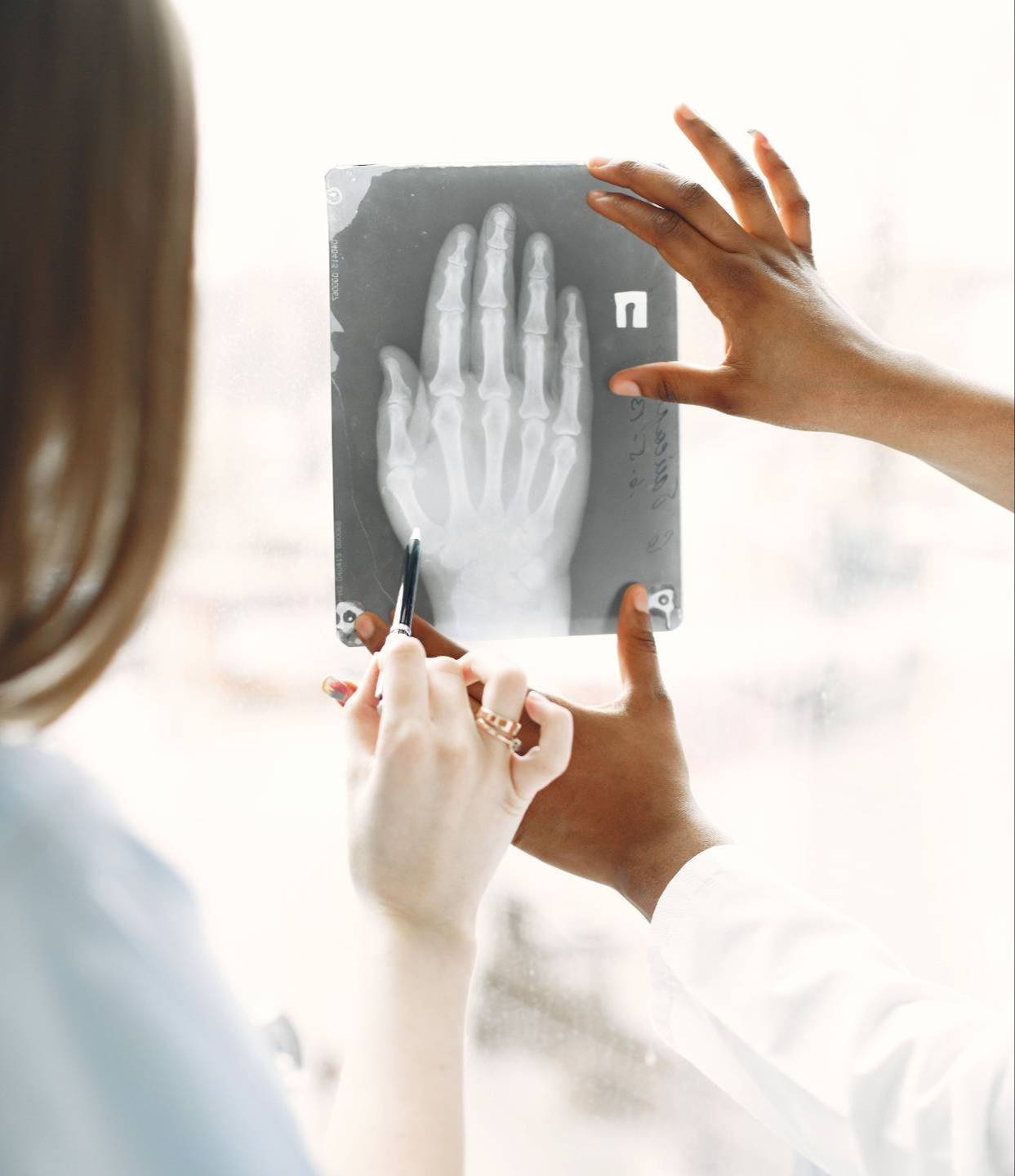
For some doctors preparing for SPEC, X-ray is one of the areas that creates the most anxiety.
Maybe you haven't taken your own films in years. Maybe imaging was never a major part of your practice. Maybe someone else read your films. Or maybe you're very comfortable with imaging, but it's been decades since someone tested you on the details.
That's why I don't assume. I teach it.
The program includes detailed Diagnostic Imaging and X-ray instruction designed to refresh:
Most importantly, we connect the image back to the patient.
Even when a question doesn't give you an actual X-ray film, understanding the imaging findings can strengthen your ability to recognize the condition being described.
Your Years in Practice Are Part of the Study Strategy
This is where SPEC preparation should be different from teaching a chiropractic student.
I'm not teaching you as though you've never seen a patient.
You've seen patients. You've taken histories. You've performed examinations. You've made diagnoses. You've managed cases.
You've had patients walk into your office who didn't look exactly like the textbook description. That experience matters.
Throughout the review, I'll frequently bring the information back into a clinical context. Think about the patients you've treated.
Now let's take that clinical knowledge and reconnect it to the terminology and details the examination may ask you to recognize.
Review →
Test
We're using what you already know to rebuild what you need to retrieve.
The Review Doesn't Stop Helping You When the Test Is Over

A clinical presentation that might previously have seemed unclear now makes more sense.
One of my favorite pieces of feedback from doctors who have completed the SPEC Review has nothing to do with their test scores.
Doctors have frequently reported that after going through the review, they returned to their offices and began recognizing diagnoses and clinical patterns they hadn't identified before. Sometimes it happens the very next week in practice.
That's exactly what I want this review to do.
Yes, we're preparing you to pass SPEC. But we're also refreshing years of diagnostic knowledge, pathology, neurology, orthopedics, imaging, and clinical reasoning.
When you reconnect that information to the years of clinical experience you already have, you may walk back into your office feeling more confident in your clinical reasoning and more alert to diagnostic patterns. Doctors have reported feeling more confident clinically and feeling that the review helped them become sharper in practice.
The exam may be why you came here. Becoming sharper and more confident in the doctor you already are is the "Beyond".
Then We Practice How the Information May Be Tested
Knowing clinical material and answering a multiple-choice examination are related skills, but they aren't exactly the same skill.
That's why your SPEC Review also includes testing samples and board-style practice.
We'll look at potential questions and work through:
WE'LL WORK THROUGH
What the question is testing
- What is the question actually asking?
- Which information matters?
- Which details are distractors?
- What diagnosis best fits the complete presentation?
- Why is one answer better than another?
- What can I eliminate immediately?
- Is the question asking for a diagnosis, finding, procedure, or management decision?
You may have years of experience knowing what you would do with a patient. Now we're practicing translating that knowledge into the best answer on the examination.
WATCH FOR
The multiple-choice traps
Sometimes you know the material, but the answer choices make you question what you know.
- A distractor may be medically true but not answer the question.
- Two conditions may share several findings, but one clue separates them.
- An answer may sound familiar but not fit this patient.
- You may recognize a diagnosis immediately, then talk yourself out of it because another answer looks more complicated.
Read the entire question. Identify what matters. Use your clinical reasoning. Answer the question they actually asked.
Start My SPEC Review:
The Detail Is Intentional, and the Results Go Beyond the Score
I could have created a shorter SPEC refresher. I chose not to.
Many doctors preparing for SPEC are returning to material they haven't formally studied in years or even decades. I would rather review something you already know than discover on test day that we skipped something you needed.

800
700s
But some of the feedback I'm most proud of comes after the exam preparation.
Doctors have returned to practice and reported recognizing diagnoses and clinical patterns they had not been identifying before, remembering clinical information they had not accessed in years, and feeling more confident in their clinical decision-making.
Prepare for SPEC. Reconnect years of clinical knowledge. Walk back into your office with greater clinical confidence.
STUDY ON YOUR OWN SCHEDULE
On-Demand Learning Matters When You're Already a Doctor
You're not a full-time student anymore.
You may be seeing patients, running a business, managing a family, working in another profession, completing requirements to return to practice, or rebuilding a professional life after being away from chiropractic for years.
Your review needs to work around that reality.
That's why the SPEC Review is on demand. Watch when your schedule allows. Pause. Rewind. Rewatch. Return to a body region. Review X-ray again. Work through another testing sample. Go back to a diagnosis you haven't thought about in 20 years.
The classroom waits for you.
On-Demand Doesn't Mean On Your Own
You aren't purchasing 20+ hours of recorded material and then being expected to figure everything out by yourself.
Your SPEC Review also includes access to scheduled live online Office Hours with Dr. Jo.
As you're working through the material, bring your questions. Haven't thought about a condition in years? Ask. Need clarification on an X-ray finding? Bring it. Confused about two similar diagnoses? Let's compare them. Have a question about why one test answer is better than another? Let's break it apart.
Sometimes all it takes is one additional explanation or clinical connection for an old piece of information to suddenly come back.
Learn on your schedule. Get live support when you need it.
OFFICE HOURS ROTATION
| Week 1 | Wednesday mornings |
| Week 2 | Wednesday evenings |
| Week 3 | Saturday afternoons |
| Week 4 | Rotation repeats |
Office Hours are offered at scheduled times and may rotate to accommodate students in different time zones.
What You Get With Your SPEC Review
01
20+ hours of comprehensive recorded instruction
02
General Diagnosis
03
Neuromusculoskeletal Diagnosis
04
Clinical presentations and differential diagnosis
05
Material organized by body region to build complete clinical pictures
06
Detailed Diagnostic Imaging and X-ray review
07
Chiropractic technique and procedures
08
Case management
09
Clinical reasoning
10
Connections between review material and your previous clinical experience
11
Testing samples and board-style practice
12
Strategies for approaching multiple-choice questions
13
Common distractors and testing traps
14
Supporting PDF study materials
15
The ability to pause, rewind, and rewatch
16
Scheduled live online Office Hours with Dr. Jo
17
More than 20 years of chiropractic board-review teaching experience
18
Option to add private 1:1 tutoring
Start My SPEC Review Now:
Built for Doctors,
Not Beginning Chiropractic Students
You don't need me to pretend you've never practiced chiropractic.
You also don't need me to assume that because you've practiced chiropractic, you remember every pathology, radiographic sign, neurological finding, orthopedic test, and board-style detail you learned years ago.
We can respect both realities.
You bring your clinical experience. I bring the structured, detailed review. Together, we reconnect the two.
That's how I want you preparing for SPEC.
Start Studying Today:
WANT MORE INDIVIDUALIZED SPEC PREPARATION?
Add 1:1 Tutoring With Dr. Jo
Private tutoring allows us to identify exactly where you need additional review.
Maybe you've been away from practice for many years. Maybe you're clinically strong but struggling with X-ray. Maybe you know the conditions but haven't taken a multiple-choice examination in decades. Maybe you're overthinking the questions. Maybe you simply want to work through more testing samples before your exam.
We can focus your tutoring on the areas that will give you the greatest benefit.
The recorded program gives you the comprehensive review.
Tutoring lets us focus specifically on YOU.
Frequently Asked Question
What is SPEC?
Is this just a shortened student board review?
Why is the material organized by body region?
Why is there so much X-ray material?
Does the course include practice questions?
What if I've been out of practice for a long time?
Can I rewatch the lectures?
What if I have questions?
Prepare for SPEC, Then Take the Knowledge Back to Your Patients.
You already have years of clinical experience. We're not replacing that experience. We're building on it.
We'll refresh the details you haven't thought about in years. Reconnect diagnoses to patients you've already seen. Review the imaging. Rebuild the clinical patterns. Practice how that information may be tested.
And then something important happens. You take all of it back to your office.
Doctors who have completed this review have reported recognizing diagnoses and clinical patterns they had not been identifying before and feeling more confident in their clinical decision-making after revisiting this material.
WHY IT MATTER
That's why this isn't simply an exam-prep course.
The test gives us a reason to review it. Your patients give us a reason to remember it.
Prepare for the exam.
Reconnect what you know.
Recognize more in the clinic.
Become more confident in the doctor you already are.
That's the "Beyond" in Chiro Boards & Beyond.
Not sure where to start? That's what the free consult is for.